
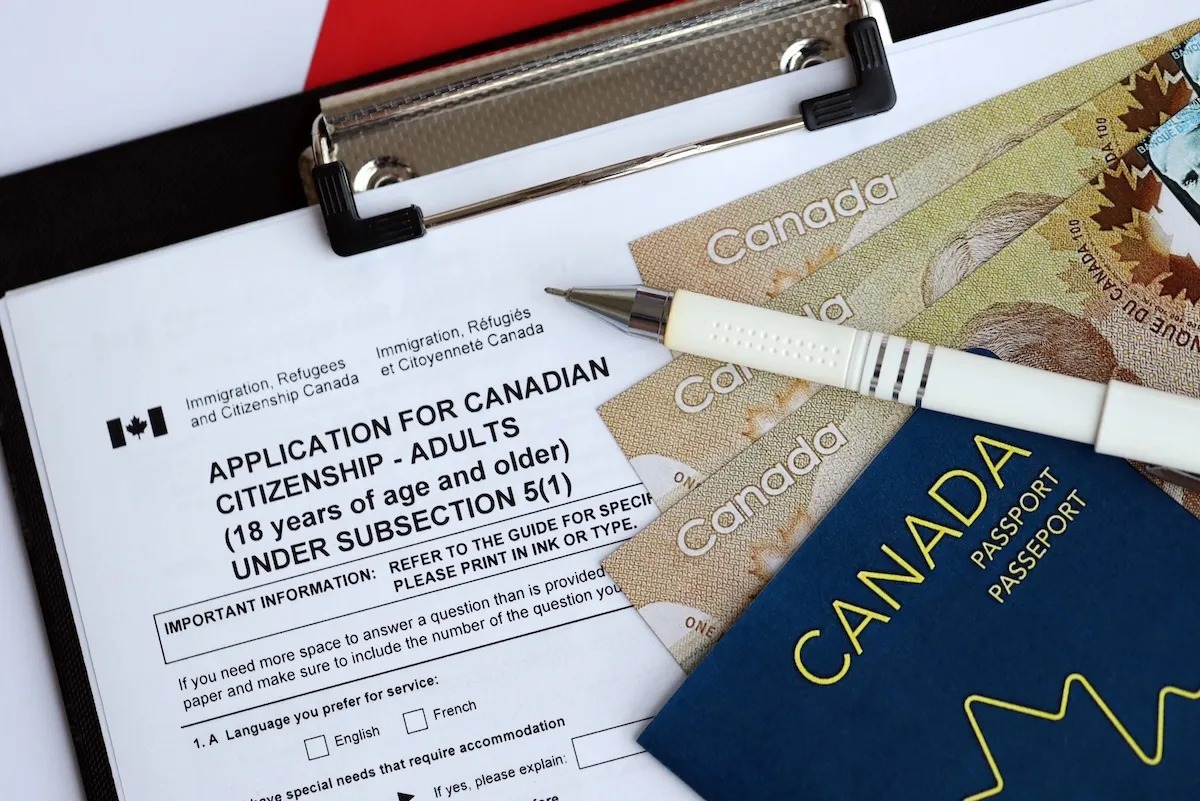
On December 15, 2025, the Canadian government officially brought Bill C-3 into force, marking the most significant overhaul of citizenship rights in over a decade. The legislation amends the Citizenship Act to dismantle the controversial “first-generation limit” (FGL)—a rule that previously prevented Canadian citizens born abroad from passing their citizenship to their own children born abroad.
This change is a direct response to the 2023 Ontario Superior Court ruling that declared the FGL unconstitutional, creating a “two-tier” system of citizenship. As of mid-December, that system has been replaced by a new “Substantial Connection” test.
The Core Change: The 1,095-Day Rule
Under the old rules (imposed in 2009), citizenship by descent was cut off after the first generation. If you were born outside Canada to a Canadian parent, you were a citizen, but you could not pass that citizenship to your children if they were also born outside Canada.
Bill C-3 replaces this blanket ban with a residency requirement.
A Canadian parent born abroad can now pass citizenship to their child born abroad, provided the parent has spent at least 1,095 cumulative days (3 years) physically present in Canada prior to the child’s birth or adoption.
How It Works in Practice
- The “Anchor” Parent: The parent must be a Canadian citizen (by birth or descent) at the time of the child’s birth.
- The Proof: The parent must provide evidence of their physical presence in Canada (e.g., tax returns, school records, employment history, lease agreements) totaling 3 years. These days do not need to be consecutive.
- The Result: If the parent meets this threshold, their child is automatically a Canadian citizen at birth, regardless of where they are born.
Who Benefits? (Two Distinct Groups)
The legislation treats families differently depending on when the child was born relative to the enactment date.
- The Retroactive Correction (Born Before Dec 15, 2025)
For individuals born before the law came into effect who were previously excluded by the first-generation limit, the restoration of citizenship is automatic and unconditional.
- Scenario: You were born in London in 2015 to a Canadian mother (who was also born in London). Under old rules, you were not Canadian.
- New Status: You are now deemed a Canadian citizen from birth. You do not need to prove your parent’s 1,095 days of residence; the limit is simply retroactively voided for this group to correct past unfairness. You can immediately apply for a Citizenship Certificate.
- The Future Standard (Born On/After Dec 15, 2025)
For children born on or after December 15, 2025, the “Substantial Connection” test strictly applies.
- Scenario: Your child is born in Tokyo on January 1, 2026. You (the parent) were born in Germany but are Canadian.
- Requirement: For your child to inherit citizenship, you must prove you lived in Canada for 1,095 days before January 1, 2026. If you cannot prove this residence, the child does not acquire citizenship by descent.
The “Lost Canadians” Resolution
Bill C-3 also closes the final loopholes for “Lost Canadians”—a term describing individuals who lost citizenship due to obscure legislative quirks (such as the old “age 28” retention rule).
- Section 8 Repeal: People who lost citizenship because they failed to reaffirm it before turning 28 (a rule active between 1977 and 2009) have their status fully restored.
- Family Unification: This ensures that families separated by legal technicalities are legally recognized as Canadian, allowing for easier sponsorship and relocation to Canada.
Strategic Steps for Affected Families
The burden of proof has now shifted from “where were you born?” to “how long did you live in Canada?”.
- Document “Physical Presence” Immediately
If you are a Canadian living abroad and plan to have children, start gathering proof of your time in Canada now.
- What works: T4 slips (tax forms), university transcripts, old passports with entry/exit stamps, and medical records.
- What doesn’t work: Affidavits (sworn statements) are generally insufficient without supporting documents.
- Apply for Proof of Citizenship (Not a Grant)
If you were previously excluded, do not apply for naturalization. You must apply for a Citizenship Certificate (Proof of Citizenship).
- Note on Processing: IRCC expects a surge in applications. The current processing time for certificates is roughly 10-15 months, though “urgent processing” is available if you can prove a need (e.g., impending travel, loss of status in current country).
- Check for Dual Citizenship Issues
While Canada permits dual citizenship, your country of residence (e.g., India, Singapore, Japan) might not. Acquiring Canadian citizenship—even automatically—can sometimes jeopardize your status in a country that strictly forbids dual nationality. Check local laws before applying for a Canadian passport.
Conclusion
Bill C-3 transforms Canadian citizenship from a rigid “bloodline” restriction into a merit-based “connection” system. It acknowledges that a Canadian born abroad who returns to live, study, or work in Canada for three years is just as “Canadian” as someone born in Toronto—and restores their right to pass that identity to the next generation.